
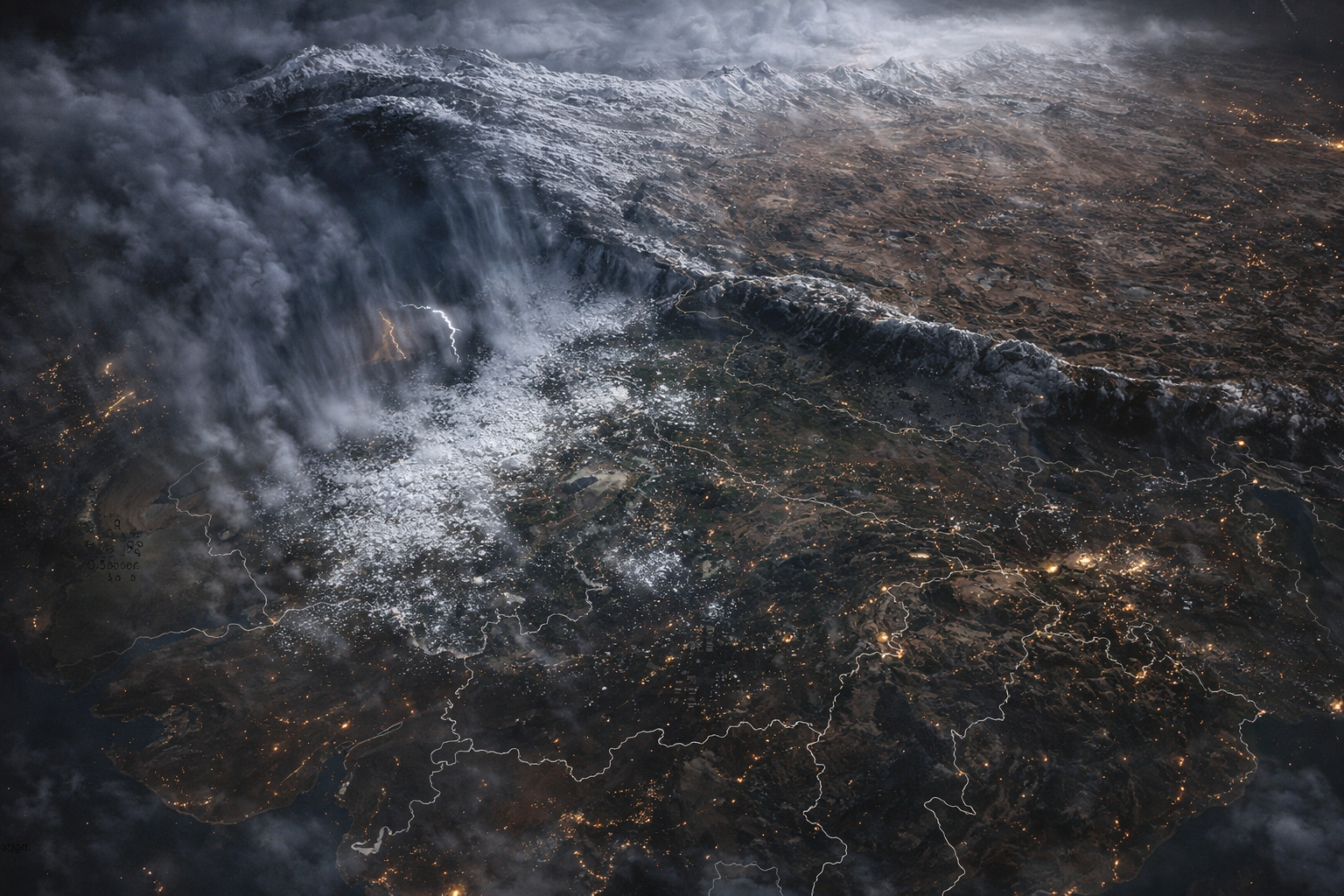
The events of 2026 in the Northern Plains of India are not just unusual weather—they are a clear signal that our climate system is changing in a dangerous way. As a climate scientist, I want to explain this in simple language so everyone can understand what is happening. The hailstorms that struck Punjab, Haryana, and Uttar Pradesh during March and April were not normal seasonal events. They arrived at the wrong time, lasted longer, and caused severe damage. These storms are part of a bigger pattern linked to climate change, and they show us that the planet is entering a new phase of instability.
For decades, the Northern Plains followed a stable climate cycle. Winters brought light rainfall, which helped crops grow, and summers remained dry until the monsoon arrived. Farmers trusted this pattern. But now, that stability is breaking. Weather is becoming unpredictable, and extreme events are becoming more common.
This is not just a recent issue. Even in the past, warning signs were visible. For example, in Haryana during the 2019–20 rabi season, more than 250,000 hectares of standing crops were damaged by storms, out of around 2.5 million hectares under wheat cultivation. Crops like wheat, mustard, chana, and barley were affected. This shows that extreme weather events were already increasing, and the situation has only become worse in recent years.
The main reason behind this change is global warming. Temperatures are rising, and warm air can hold more moisture. This extra moisture acts as fuel for storms. When storms form, they become stronger and more destructive. Instead of steady rainfall, we now see sudden and intense weather events.
At the same time, the atmosphere is becoming more unstable. Warm air near the ground rises quickly into colder air above, creating powerful storms. This leads to the formation of large hailstones, strong winds, and heavy rain. That is why hailstorms today are more damaging than before.
Weather systems like western disturbances are also changing. They are coming later, staying longer, and sometimes arriving in groups. In 2026, multiple disturbances occurred together, keeping the atmosphere unstable for a long period. This caused repeated storms and increased destruction.
The impact on farmers is severe. Crops are destroyed just before harvest, which means months of hard work are lost in minutes. Income is gone, and debt increases. This creates financial stress and uncertainty for farmers and their families.
The effects go beyond agriculture. Strong storms damage infrastructure, disrupt daily life, and affect food supply. Prices can increase, and the economy faces pressure. Climate change is not just an environmental issue—it is a social and economic problem as well.
Looking ahead, the situation may become even more serious. Future climate projections show rising temperatures, more moisture in the atmosphere, and stronger storms. This means extreme events like hailstorms will likely increase in frequency and intensity.
However, there are ways to reduce the impact. Better weather forecasting and early warning systems can help people prepare. Climate-resilient farming practices, crop diversification, and improved insurance systems can reduce losses. Governments must focus on both prevention and support. At a global level, reducing greenhouse gas emissions is necessary to slow down climate change.
Conclusion:
The message is clear. Climate change is already affecting our lives.
We have already seen large-scale damage in the past. In Haryana alone, over 250,000 hectares of crops were damaged in a single season, showing how vulnerable agriculture has become. In recent years, multiple states across India have reported repeated crop losses due to unseasonal rain and hailstorms, with thousands of crores of rupees lost annually due to extreme weather events.
These are not just numbers. They represent lost income, rising debt, and growing uncertainty for millions of people. The storms we are seeing today are not random. They are signals of a changing climate system. If we continue without action, these events will become more frequent and more severe.
If we act now, we can reduce the damage.
If we delay, the consequences will only grow stronger.
Leave a Reply